

Queer and lesbian women have always existed throughout history (Happy Pride!) But we can be hard to find in records. Scholars often have high demands for proof of sexuality, which is notoriously hard to find and we don’t demand sexual evidence from straight couples. Yet, we hear they were “roommates” who shared a bed, “close friends” who exchanged rings, “companions” who built a life together, and so on.
This list isn’t about vague “roommates.” These women were queer and visible, if you’re willing to look. That doesn’t mean forcing modern labels onto the past; it just means not looking away.
Below are 12 queer women (with one maybe exception) who made waves in literature, the arts, and politics. It’s a small slice of queer history, not the whole picture. Most of these women were rich and famous, which gave them the visibility and privilege to leave records behind. That’s rare. Many queer lives, especially those outside whiteness, wealth, or safety, are harder to trace.
Aside from Sappho, everyone here lived in North or Central America or the UK, from the late 1700s to now. There are so many more stories out there, and hopefully this sparks your curiosity to find them.
1. Sappho (approx. 620-550 BCE)
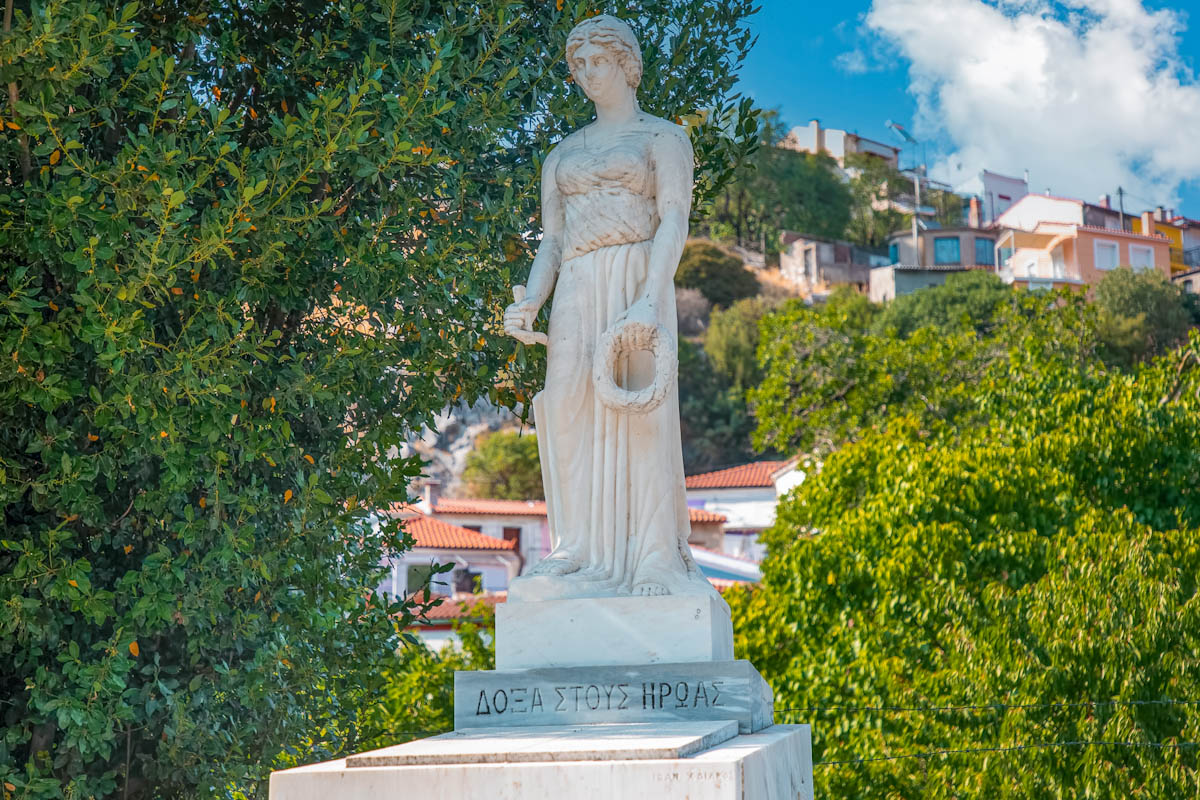
We start, of course, with Sappho, the ancient Greek poet famous for giving us the words sapphic (from her name) and lesbian (from her home island of Lesbos). Her poetry survives only in fragments, but it was powerful enough for Plato to call her “the tenth Muse.”
Sappho’s poems often burn with that love and longing. One opens, “O but my delicate lover, / Is she not fair as the moonlight?”
In the Anactoria poem, she writes:
she’s not here, and I’d rather see her lovely
step, her sparkling glance and her face
than gaze on all the troops in Lydia
in their chariots and glittering armor.
Because of this supposedly scandalous content, Sappho’s reputation suffered throughout history and after her death. Anecdotally, Pope Gregory VII was said to have ordered the destruction of her works in the late 11th century. Sappho found new admirers in the mid-to-late nineteenth century, including poets John Addington Symonds and Algernon Charles Swinburne, both important figures in the history of queer literature. Today, Sappho not only remains widely studied and admired, but she’s also an iconic lesbian cultural symbol.
2. Anne, Queen of Great Britain (1665-1714, r. 1702-1714)

Queen Anne’s deep, passionate attachments to women have fueled centuries of speculation about her queerness. She and Sarah Churchill, Duchess of Marlborough, were very close. They wrote each other passionate letters and addressed each other as “Mrs. Morley” and “Mrs. Freeman,” apparently so they could speak as equals. Anne called Sarah the “dear woman who my soul loves.”
The intensity of her attachments mattered. Anne didn’t just like these women; she elevated them above all others, to the point that it shaped court politics. Sarah used her influence to help her husband and the Whig party gain power. But when Sarah’s ambitions clashed with Anne’s loyalty to the Tories, her cousin Abigail Masham began to edge into Sarah’s place as royal favorite.
Sarah didn’t take it well. She threatened to publish private letters that hinted at Anne’s sexual secrets and spread rumors of relationships between Anne and both Sarah and Abigail. The fact that this blackmail had power suggests these relationships were seen as plausibly intimate even at the time. Pop culture, The Favourite included, wasn’t inventing these dynamics out of nothing. Those rumors existed in Anne’s own lifetime. Whether true or political weapons, they stuck. They continue to shape how Anne is remembered today, from scholarship to film.
3. Anne Lister (1791-1840)

You probably know Anne Lister from BBC/HBO’s Gentleman Jack (2019–2022), the unfortunately canceled series based on her life. Lister was a wealthy Yorkshire landowner, well educated, and passionate about travel, mountain climbing, and business. After inheriting Shibden Hall in Halifax, she became a force in the coal industry. Known for her masculine style, she always dressed in black, earning the nickname “Gentleman Jack,” a jab at her rejection of femininity.
Unlike many queer women of her time, we don’t have to search for clues about Lister’s relationships. She left detailed, often explicit diaries documenting her affairs with women, as well as her business dealings, travels, and daily life. Historian Helena Whitbread spent five years decoding them, uncovering Lister’s relationships with women like Eliza Raine and Mariana Belcombe. Lister even coined personal slang: “kiss” meant sex, and “incurred a cross” meant orgasm.
In 1834, long before same-sex marriage was legal in the UK, Lister and her partner Ann Walker exchanged vows, gave each other rings, and took communion together at Holy Trinity Church in York. A plaque now marks the spot where they sealed their union. The two lived openly as wives until Lister’s death in 1840.
4. Jane Addams (1860-1935)

Jane Addams was the first American woman to win the Nobel Peace Prize, and that was just one of many achievements! She was a pioneer in social work, a leader in the women’s suffrage movement, and a champion of pacifism.
Born into a well-off Illinois family, Addams received a college education at a time when that was still rare for women. In 1888, she traveled to England with Ellen Gates Starr, one of those mysterious “close friends” so common in historical overviews of nineteenth-century women who never married. There, they visited Toynbee Hall, a settlement house in a poor London neighborhood that inspired them to create something similar in Chicago.
In 1889, they opened Hull House, offering kindergartens, vocational training, cooking classes, art programs, and more for working Chicagoans. Addams became known as a force for improving city life. She even served as an official garbage inspector in 1895.
All of Addams’s most significant relationships were with women. After Starr, there was Mary Rozet Smith, a donor and administrator at Hull House. Addams and Smith lived together for nearly four decades, owned property together, and even considered adopting. Addams reportedly described their relationship as a “marriage.” In 2008, she was posthumously inducted into the Chicago Gay and Lesbian Hall of Fame.
5. Ethel Smyth (1858-1944)

Ethel Smyth may not be the first name you think of in the UK women’s suffrage movement, but she should be. In 1910, after meeting Emmeline Pankhurst, Smyth dedicated two years to the fight for women’s right to vote. She marched, smashed windows, wrote essays for the Suffragette, and landed in prison. There, she was seen using a toothbrush as a baton to musically conduct her fellow imprisoned suffragettes in singing “The March of the Women.”
Long before her suffragette activism, Smyth was already breaking gender barriers as a composer. At nineteen, she left England for Leipzig to study composition. In the 1870s, women were expected to stick to parlor music, perhaps playing the piano to attract a husband, rather than writing operas or symphonies. But Smyth pushed past a misogynistic musical world, composing six operas, a mass, chamber music, art songs, and more.
Smyth was also openly queer. She had a massive crush on Pankhurst and later became enamored with Virginia Woolf. She had several affairs with women, including the writer Edith Somerville. Her one heterosexual romance, with artistic collaborator Henry Brewster, didn’t last. “I wonder why it is so much easier for me, and I believe for a great many English women, to love my own sex passionately rather than yours?” she wrote to him.
6. Radclyffe Hall (1880-1943)

Radclyffe Hall wrote the most famous lesbian novel of the early 20th century. The Well of Loneliness (1928) was the first major English-language novel to center a lesbian character and demand acceptance of same-sex love. Largely autobiographical, the novel follows Stephen Gordon, an upper-class woman who rejects femininity, loves women, and sacrifices her happiness so her partner can marry a man.
Published in 1928, the book was banned after an obscenity trial, not for any explicit content (there is no sex in the novel) but for daring to portray lesbian life at all. Writers like Virginia Woolf, who opposed censorship despite finding the novel bleak and overly serious, defended Hall. The book was destroyed in Britain and only republished in 1949 after Hall’s death. Today, it’s a part of classic lesbian literature.
Like her character Stephen, Hall identified as an “invert,” an early 20th-century term for same-sex attraction that also carried ideas we might now link to trans identity. But unlike Stephen, Hall found lasting love. In 1915, she met Una Troubridge, an aristocratic sculptor. The two lived together for nearly 30 years, sharing a home and a deep devotion to their dogs.
Hall’s legacy extends beyond the novel. Her public life with Una made her one of the most visible lesbians of her era. Though shaped by conservative views about class and gender, Hall’s defiance of censorship and unapologetic visibility made her a lasting symbol of queer resistance.
7. Virginia Woolf (1882-1941)

Virginia Woolf was a British writer who explored queer love, gender fluidity, and women’s inner lives in fiction, and whose work remains essential to feminist and queer literary studies today.
Growing up in the late Victorian era, she wasn’t allowed to attend school like her brothers. But she was an avid reader and eventually began writing essays, reviews, and other pieces for periodicals.
After their father died in 1904, Woolf and her siblings moved to Bloomsbury, where they gathered young intellectuals such as Lytton Strachey, John Maynard Keynes, Roger Fry, and Leonard Woolf, whom she married in 1912. Together, these writers and artists became known as the Bloomsbury Group.
Woolf formed close relationships with women, but labels mattered little within the Bloomsbury circle, where many lived in unconventional, sexually fluid arrangements. Her sister Vanessa, for example, married Clive Bell but had a child with Duncan Grant, who was primarily attracted to men.
One of Woolf’s greatest loves was Vita Sackville-West, an openly sapphic married aristocrat and writer. Sackville-West inspired Orlando (1928), Woolf’s playful novel about a gender-changing protagonist who lives across centuries.
From 1915, Woolf wrote eight novels and several nonfiction books. She and Leonard founded the Hogarth Press, which published her works alongside writers like T.S. Eliot. She struggled with mental health throughout her life. and in 1941, during a period of deep depression, she died by suicide in the River Ouse.
Her books, including Mrs. Dalloway (1925) and A Room of One’s Own (1929), remain classics.
8. Eleanor Roosevelt (1884-1962)

Eleanor Roosevelt was First Lady of the United States from 1933 to 1945 and became one of the most influential political figures of her era, using her platform to champion human rights and later serve at the United Nations.
What’s less openly acknowledged is Roosevelt’s deep romantic relationship with journalist Lorena Hickok. The two met during Franklin D. Roosevelt’s 1932 presidential campaign, when Hickok was assigned to cover Eleanor. They grew so close that Hickok left her job at the Associated Press, unable to report on Roosevelt objectively. By 1941, Hickok had moved into a room just across the hall from Roosevelt’s in the White House.
Roosevelt’s letters to Hickok reveal the intimacy of their bond. In 1933, she wrote: “My pictures are nearly all up and I have you in my sitting room where I can look at you most of my waking hours. I can’t kiss you so I kiss your picture good night and good morning. … A world of love to you and good night and God bless you, light of my life.”
Their relationship has been explored in Amy Bloom’s novel White Houses (2018) and Susan Quinn’s nonfiction Eleanor and Hick: The Love Affair That Shaped a First Lady (2016). Despite decades of coded descriptions as “close friends,” Roosevelt’s connection with Hickok remains one of the most significant and visible queer relationships in U.S. political history.
9. Josephine Baker (1906-1975)

Josephine Baker was an American-born Black entertainer, international star, and World War II spy. Born in St. Louis, Missouri, she began her career in vaudeville before moving to New York City during the Harlem Renaissance. Later, she moved to Paris, where she gained global fame for her dancing, films, and signature banana skirt.
During World War II, Baker risked her life for the French Resistance, smuggling secret messages hidden in sheet music and her costumes. After the war, she became active in the American civil rights movement, refusing to perform for segregated audiences and adopting a “Rainbow Tribe” of children from around the world to model her vision of racial harmony.
Baker was bisexual. In addition to several marriages to men, she had relationships with women. Her (informally) adopted son Jean-Claude Baker wrote that she had affairs with at least six women while performing in the U.S. and others in Paris, including the novelist Colette.
Many of Baker’s performances live on in films like Zouzou (1934) and Princesse Tam Tam (1935), where her star power shines on screen. There is also the classic biopic The Josephine Baker Story (HBO, 1991).
The most candid account of her life is Josephine Baker: The Hungry Heart by Jean-Claude Baker and Chris Chase. It openly explores her relationships with women, naming lovers and describing her bisexuality without glossing over or hiding the truth.
10. Billie Holiday (1915-1959)

Billie Holiday was one of the greatest voices in music history, and she lived openly as a bisexual woman in the 1930s and 1940s, during the Jim Crow era. She is most famously said to have had a romantic relationship with actress Tallulah Bankhead. Holiday intended to mention Bankhead in her autobiography Lady Sings the Blues, but Jack Dufty, her co-writer, was reportedly pressured to remove that section to avoid legal trouble and protect Bankhead’s reputation. Biographer John Szwed notes that early book drafts included the relationship but were omitted at the last minute. Their connection was recently depicted in the film The United States vs. Billie Holiday (2021).
Holiday came up in Harlem’s vibrant music scene during the final years of the Harlem Renaissance, helping carry its legacy into the swing and jazz eras.
In 1939, she recorded “Strange Fruit,” the anti-lynching anthem that became her most famous and controversial work. Written by Abel Meeropol, the song condemned racist violence in America. Holiday’s decision to perform it made her a target of government harassment. She was watched by the FBI, who claimed it was because of her drug use, and was eventually sentenced to a year in prison.
Despite these efforts, Strange Fruit outlasted every effort to silence it. In 1999, TIME named it the “song of the century.”
11. Chavela Vargas (1919-2012)

Chavela Vargas was a Costa Rican-born singer who became a queer icon in Mexican music. She sang love songs to women and dared the world to listen. Born in Costa Rica, she moved to Mexico as a teenager and began singing on the streets, eventually becoming known for her powerful renditions of rancheras.
Rancheras were traditionally sung by men, often expressing love for women, but Vargas sang them without changing the female pronouns. She performed in ponchos and pants, sometimes carrying a gun, at a time when women were expected to wear skirts and dresses.
Vargas did not publicly come out until she released her autobiography at age 81, but she had been living openly as a queer woman for years. She never married, but was known for her affairs. “She had a reputation as a robaesposas [wife-stealer],” writes Sandra Cisneros. Most famously, she is said to have had affairs with Frida Kahlo and Ava Gardner. There is even evidence of a letter Kahlo wrote to a friend about her attraction to Vargas.
Vargas recognized the challenges of being openly queer, saying, “Homosexuality doesn’t hurt[.] What hurts is when you’re treated like you have the plague because of it.” Yet she stayed unapologetic, becoming an enduring symbol of lesbian identity, inspiring generations of queer fans.
12. Audre Lorde (1934-1992)
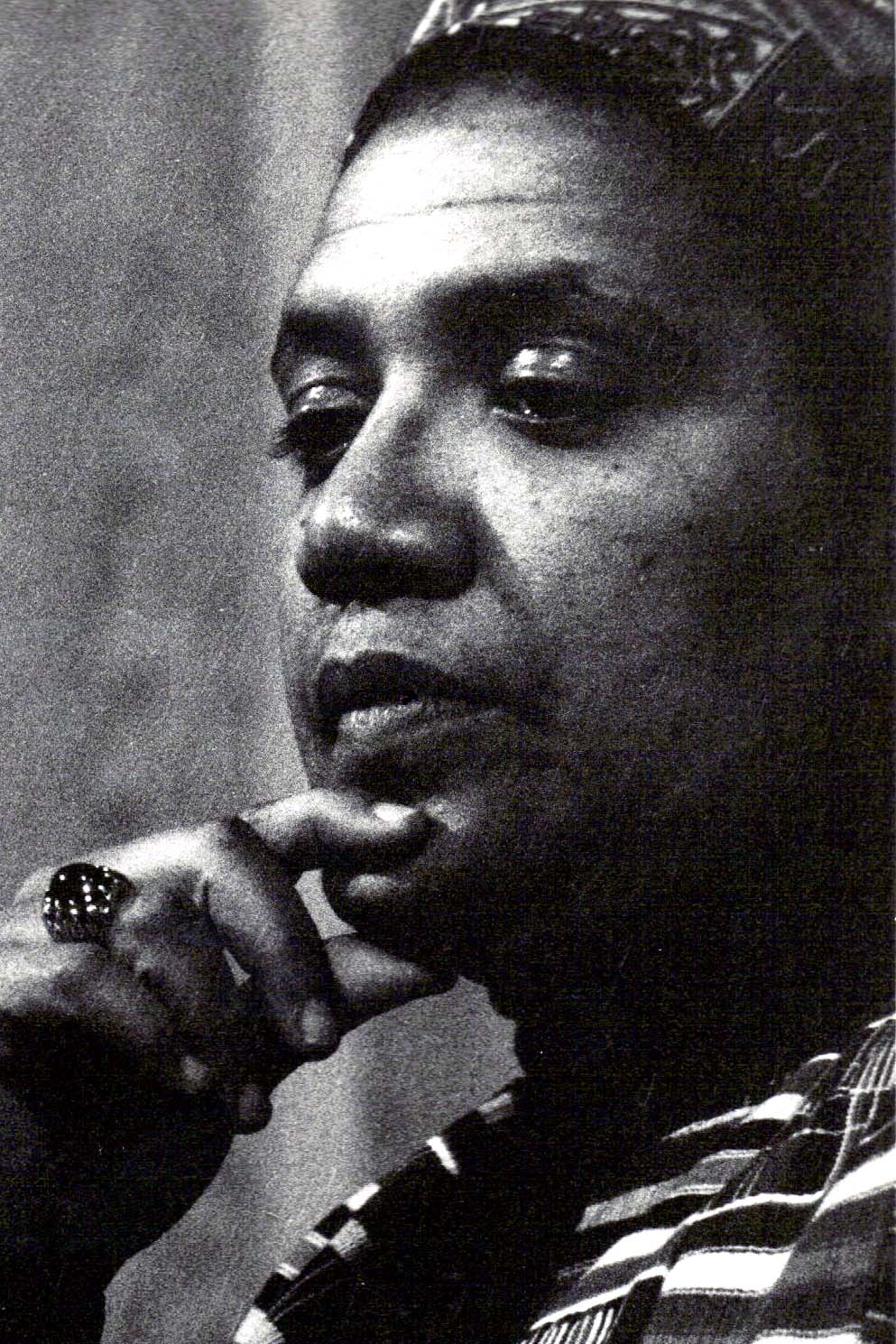

Audre Lorde was a self-described “Black, lesbian, mother, warrior, poet” who used her voice to confront racism, sexism, and injustice. Born in New York City’s Harlem in 1934, she began writing as a child and published her first poem in Seventeen while still in high school.
Lorde’s identity as a Black lesbian was central to her work and politics. Lorde believed in the power of women’s differences and challenged readers to see liberation as a collective project, calling for solidarity across lines of race, class, sexuality, and background. She famously wrote in her essay “The Master’s Tools Will Never Dismantle the Master’s House”:
As women, we have been taught either to ignore our differences, or to view them as causes for separation and suspicion rather than as forces for change. Without community there is no liberation, only the most vulnerable and temporary armistice between an individual and her oppression… Those of us who stand outside the circle of this society’s definition of acceptable women; those of us who have been forged in the crucibles of difference—those of us who are poor, who are lesbians, who are black, who are older—know that survival is not an academic skill. It is learning how to stand alone… and how to make common cause with those others identified as outside the structures in order to define and seek a world in which we can all flourish.
Her notable books include Coal (1976), The Black Unicorn (1978), and Sister Outsider (1984). The last one is a collection of essays and speeches that remains a key reading in feminist studies.
Lorde married a gay man and had two children before they divorced in 1970. Her later relationships were openly lesbian. In 1972, she began a relationship with psychology professor Frances Clayton, and they remained together until the late 1980s.
Sources and Further Reading
Sappho
- https://www.poetryfoundation.org/poets/sappho
- https://poets.org/poet/sappho
- https://chs.harvard.edu/primary-source/sappho-sb/
- https://www.theparisreview.org/blog/2020/12/08/what-we-know-of-sappho
- https://www.theguardian.com/culture/charlottehigginsblog/2010/jan/11/sappho-poetry-classics
- https://classicalpoets.org/2018/11/a-beginners-guide-to-sapphic-verse/
- https://glreview.org/article/algernon-swinburnes-sapphics/
Queen Anne
- https://www.youtube.com/watch?v=R0absASrnmE
- https://www.historyextra.com/membership/queen-anne-feuding-favourites-women-olivia-colman
- https://www.historyextra.com/period/stuart/queen-anne-facts-life-favourites-duchess-marlborough-union-england-scotland
- https://museums.cam.ac.uk/magic/queen-annes-love-life
- https://www.npg.org.uk/collections/search/person/mp00111/queen-anne
- https://www.bbc.co.uk/history/historic_figures/anne.shtml
- https://www.westminster-abbey.org/abbey-commemorations/royals/queen-anne
- https://www.rct.uk/collection/people/anne-queen-of-great-britain-1665-1714
- https://www.rmg.co.uk/stories/topics/who-was-queen-anne
- https://www.hrp.org.uk/kensington-palace/history-and-stories/queen-anne/#gs.l9f1el
- https://www.britannica.com/biography/Anne-queen-of-Great-Britain-and-Ireland
- https://www.royal.uk/queen-anne
Anne Lister
- https://english.northwestern.edu/about/anne-lister-society/story.html
- https://historicengland.org.uk/research/inclusive-heritage/lgbtq-heritage-project/love-and-intimacy/anne-lister-and-shibden-hall
- https://www.bbc.co.uk/news/resources/idt-sh/the_life_and_loves_of_anne_lister
- https://www.york.ac.uk/borthwick/holdings/research-guides/lgbt/anne-lister
- https://www.bbc.com/news/uk-england-york-north-yorkshire-68690135
- Helena Whitbread, ed. The Secret Diaries of Miss Anne Lister, https://www.annelister.co.uk/books-by-helena-whitbread/
- Helena Whitbread, ed. The Secret Diaries of Miss Anne Lister Volume 2: No Priest But Love, https://www.annelister.co.uk/books-by-helena-whitbread/
Jane Addams
- https://www.womenshistory.org/education-resources/biographies/jane-addams
- https://www.nobelprize.org/prizes/peace/1931/addams/biographical
- https://plato.stanford.edu/entries/addams-jane
- https://www.hullhousemuseum.org/about-jane-addams
- https://www.pbs.org/wgbh/americanexperience/features/chicago-jane-addams-1860-1935
- https://www.neh.gov/article/jane-addams-hero-our-time
- https://janeaddams.ramapo.edu/about-jane-addams
- https://chicagolgbthalloffame.org/addams-jane/
- https://sah-archipedia.org/buildings/IL-01-031-0037
- https://www.wbez.org/curious-city/2013/09/05/should-we-use-the-l-word-for-jane-addams
Ethel Smyth
- https://www.classicfm.com/discover-music/suffragette-ethel-smyth
- https://www.eno.org/composers/dame-ethel-mary-smyth
- https://www.bbc.com/culture/article/20220720-ethel-smyththe-rebel-composer-erased-from-history
- https://www.glyndebourne.com/festival/ethel-smyth-always-completely-herself/#:~:text=In%20the%20later%2020th%20century,lesbian%20than%20for%20her%20music
- Ethel Smyth, Female Pipings in Eden, 2nd ed. (Edinburgh: Peter Davies Limited, 1934)
- Gates, Eugene. “Damned if You Do and Damned if You Don’t: Sexual Aesthetics and the Music of Dame Ethel Smyth.” The Journal of Aesthetic Education 31, no. 1 (Spring 1997): 63- 71.
- Harris, Amanda. “Recomposing Her History: the Memoirs and Diaries of Ethel Smyth.” Life Writing 8, no. 4 (2011): 421-31.
- —. “‘Comrade’ Ethel Smyth in the ‘great liberative war of women’: An English Musical Feminism.” In Felsensprengerin, Brückenbauerin, Wegbereiterin, Die Komponistin Ethel Smyth, Edited by Cornelia Bartsch, Rebecca Grotjahn, and Melanie Unseld, 70-84. München: Allitera Verlag, 2010.
- Lumsden, Rachel. “‘The Music Between Us’: Ethel Smyth, Emmeline Pankhurst, and ‘Possession.’” Feminist Studies 41, no. 2 (2015): 335-70.
- Smyth, Ethel. “England, Music, and—Women.” The English Review (February 1916): 187-98.
- —. Female Pipings in Eden. 1933. 2nd ed. Edinburgh: Peter Davies Limited, 1934.
- —. Letter to the Editor. The Times. Wednesday, February 28, 1912: 7.
- —. Streaks of Life. London: Longmans, Green, and Co., 1921.
- —. “Venus, the Bishops, and a Moral.” The Suffragette 3, no. 81 (May 1, 1914): 57-58. Bancroft Library, University of California, Berkeley. ff JN976 S8, v. 1-3.
- —. “Women and Mr. Shapiro’s Orchestra.” The Suffragette 2, no. 61 (December 12, 1913): 199.
- St. John, Christopher. Ethel Smyth: A Biography. London: Longmans, Green and Co., 1959.
- Wiley, Christopher. “Music and Literature: Ethel Smyth, Virginia Woolf, and ‘The First Woman to Write an Opera.’” The Musical Quarterly 96 (October 2013): 263-95. doi:10.1093/musqtl/gdt012.
- Wood, Elizabeth. “Performing Rights: A Sonography of Women’s Suffrage.” The Musical Quarterly 79, no. 4 (Winter 1995): 606-43.
- —. “Women, Music, and Ethel Smyth: A Pathway in the Politics of Music.” The Massachusetts Review, 24 no. 1 (Spring 1983): 125-39.
- Marleen Hoffmann, “‘It seemed to me my first duty to signify I was one of the fighters’: Ethel Smyth’s two years of suffrage activities and her suffrage music,” in Women’s Suffrage in Word, Image, Music, Stage, and Screen: The Making of a Movement, ed. Christopher Wiley and Lucy Ella Rose (London: Routledge, 2021), 186-204.
Radclyffe Hall
- https://beta.nationalarchives.gov.uk/explore-the-collection/stories/radclyffe-hall
- https://www.britannica.com/biography/Radclyffe-Hall
- https://blog.nationalarchives.gov.uk/i-need-never-have-known-existence-radclyffe-hall-and-lgbtq-visibility/
- https://www.bbc.com/culture/article/20221121-the-well-of-loneliness-the-most-corrosive-book-ever
- https://www.hrc.utexas.edu/teaching/radclyffe-hall-una-vincenzo-lady-troubridge/biography
- https://www.english-heritage.org.uk/visit/blue-plaques/radclyffe-hall
- https://www.pbs.org/wgbh/roadshow/articles/the-history-and-legacy-surrounding-the-well-of-loneliness-the-first-lesbian-novel-to-be-published-in-the-united-states-and-britain
- https://cdm15878.contentdm.oclc.org/digital/collection/p15878coll106
- https://onlinelibrary.wiley.com/doi/abs/10.1111/1468-0424.12634
Virginia Woolf
- https://campuspress.yale.edu/modernismlab/virginia-woolf/
- https://www.english-heritage.org.uk/visit/blue-plaques/virginia-woolf
- https://artsandculture.google.com/story/take-a-tour-of-virginia-woolf%E2%80%99s-life-in-london/1wXhSk5yw18Iiw?hl=en
- https://www.nationaltrust.org.uk/visit/sussex/monks-house/who-was-virginia-woolf
- Gillian Gill, Virginia Woolf and the Women Who Shaped Her World (Houghton Mifflin Harcourt, 2019), https://www.google.com/books/edition/Virginia_Woolf/0uB-DwAAQBAJ?hl=en&gbpv=1&pg=PP5&printsec=frontcover
Eleanor Roosevelt
- https://www.fdrlibrary.org/er-biography
- http://www.fdrlibrary.marist.edu/archives/collections/franklin/index.php?p=collections/findingaid&id=160
- https://time.com/4276317/lorena-hickok
- https://erpapers.columbian.gwu.edu/short-biography-eleanor-roosevelt
- https://www.kirkusreviews.com/book-reviews/susan-quinn/eleanor-and-hick
- https://www.oah.org/wp-content/uploads/2023/07/508_ELRO.508.pdf
- https://www.jstor.org/stable/26364047?read-now=1&seq=1#page_scan_tab_contents
- https://www.nyclgbtsites.org/site/eleanor-roosevelt-residence/
- https://www.nyclgbtsites.org/site/lorena-hickok-residence/
- https://erpapers.columbian.gwu.edu/lorena-alice-hickock-1893-1968
- https://erpapers.columbian.gwu.edu/short-biography-eleanor-roosevelt
- https://www.historytoday.com/archive/feature/eleanor-roosevelts-second-act
Josephine Baker
- https://www.vanityfair.com/hollywood/2020/09/josephine-baker-biography-paris?srsltid=AfmBOoq6ioQAPku5hndz6U6Khz-gveGPWONkL0D0whm12G5i1HQ6P1Zz
- https://www.womenshistory.org/education-resources/biographies/josephine-baker
- https://nmaahc.si.edu/josephine-baker
- https://www.britannica.com/biography/Josephine-Baker
- https://www.theguardian.com/culture/2025/apr/06/josephine-baker-the-superstar-turned-spy-who-fought-the-nazis-and-for-civil-rights
- https://guides.loc.gov/feminism-french-women-history/famous/josephine-baker
- https://www.nypl.org/blog/2021/04/12/josephine-baker-entertainer-activist
- https://www.architecturaldigest.com/gallery/josephine-baker-at-home
- https://www.vogue.com/article/josephine-baker-90th-anniversary-banana-skirt
- https://glreview.org/article/article-959/
Billie Holiday
- https://nmaahc.si.edu/billie-holiday
- https://www.theguardian.com/music/2020/nov/06/billie-holiday-documentary-lost-tapes-racism-in-united-states
- https://www.theatlantic.com/magazine/archive/2000/11/our-lady-of-sorrows/378438
- https://www.britannica.com/biography/Billie-Holiday
- https://www.pbs.org/wnet/americanmasters/billie-holiday-about-the-singer/68/
- https://www.npr.org/2015/04/07/397877385/billie-holiday-a-singer-beyond-our-understanding
- https://www.theguardian.com/music/2020/nov/06/billie-holiday-documentary-lost-tapes-racism-in-united-states
- https://theconversation.com/decades-after-billie-holidays-death-strange-fruit-is-still-a-searing-testament-to-injustice-and-of-faithful-solidarity-with-suffering-219463
- https://www.pbs.org/wnet/americanmasters/the-story-behind-billie-holidays-strange-fruit/17738/
- https://entertainment.time.com/2011/10/24/the-all-time-100-songs/slide/strange-fruit-billie-holiday/
- Loehr, Kirsty. “A Short History of Queer Women.” https://www.amazon.com/Short-History-Queer-Women/dp/0861542843
Chavela Vargas
- https://www.newyorker.com/culture/culture-desk/postscript-mexicos-majestic-lesbian-chanteuse-chavela-vargas
- https://www.theguardian.com/music/2012/aug/12/chavela-vargas
- https://archive.nytimes.com/www.nytimes.com/interactive/2012/12/30/magazine/the-lives-they-lived-2012.html?view=Chavela_Vargas
- https://www.npr.org/sections/therecord/2012/08/06/158166344/chavela-vargas-legendary-ranchera-singer-has-died
- https://www.britannica.com/biography/Chavela-Vargas
- https://www.mutualart.com/Article/The-Weeping-Women–Frida-Kahlo-and-Chave/8BECF827ED4B8E19
- https://www.bbc.com/news/world-latin-america-19141242
- https://www.mutualart.com/Article/The-Weeping-Women–Frida-Kahlo-and-Chave/8BECF827ED4B8E19
- https://www.vice.com/en/article/frida-kahlo-personal-possessions-diego-rivera/
- https://aldianews.com/en/culture/books-and-authors/always-yours-frida
- https://www.biography.com/artists/frida-kahlo-real-rumored-affairs-men-women
- https://www.chavelavargasfilm.com/chavela-vargas
- https://www.advocate.com/arts-entertainment/2017/10/06/chavela-vargas-lesbian-legend-mythmaker
Audre Lorde
- https://www.poetryfoundation.org/poets/audre-lorde
- https://alp.org/about/audre
- https://www.womenshistory.org/education-resources/biographies/audre-lorde
- https://nmaahc.si.edu/audre-lorde
- https://poets.org/poet/audre-lorde
- https://www.latimes.com/archives/la-xpm-1992-11-19-mn-862-story.html
- https://www.nyclgbtsites.org/site/audre-lorde-residence/
- https://www.womenofthehall.org/wp-content/uploads/2024/07/Lorde-Audre-Masters-Tools.pdf
About the Author: Katherine Hobbs, Ph.D
Katherine Hobbs is a writer and public historian based in Los Angeles, CA. Her writing has appeared in Smithsonian, Public Books, and other academic and popular venues. She has a Ph.D. in English (Victorian Literature) from UC-Berkeley.
Read More Lesbian Resources
- Eve Adams: Pioneer of NYC’s First Lesbian Bar
- 14 Iconic Lesbian Superheroes on Screen and in Comic Books
- 18 Culturally Influential Lesbian TikTokers to Follow
- A Beginner’s Introduction to Lesbian Culture
- The 2020s Lesbian Renaissance, Explained
- 12 Lesbian Symbols Through History and Their Meanings